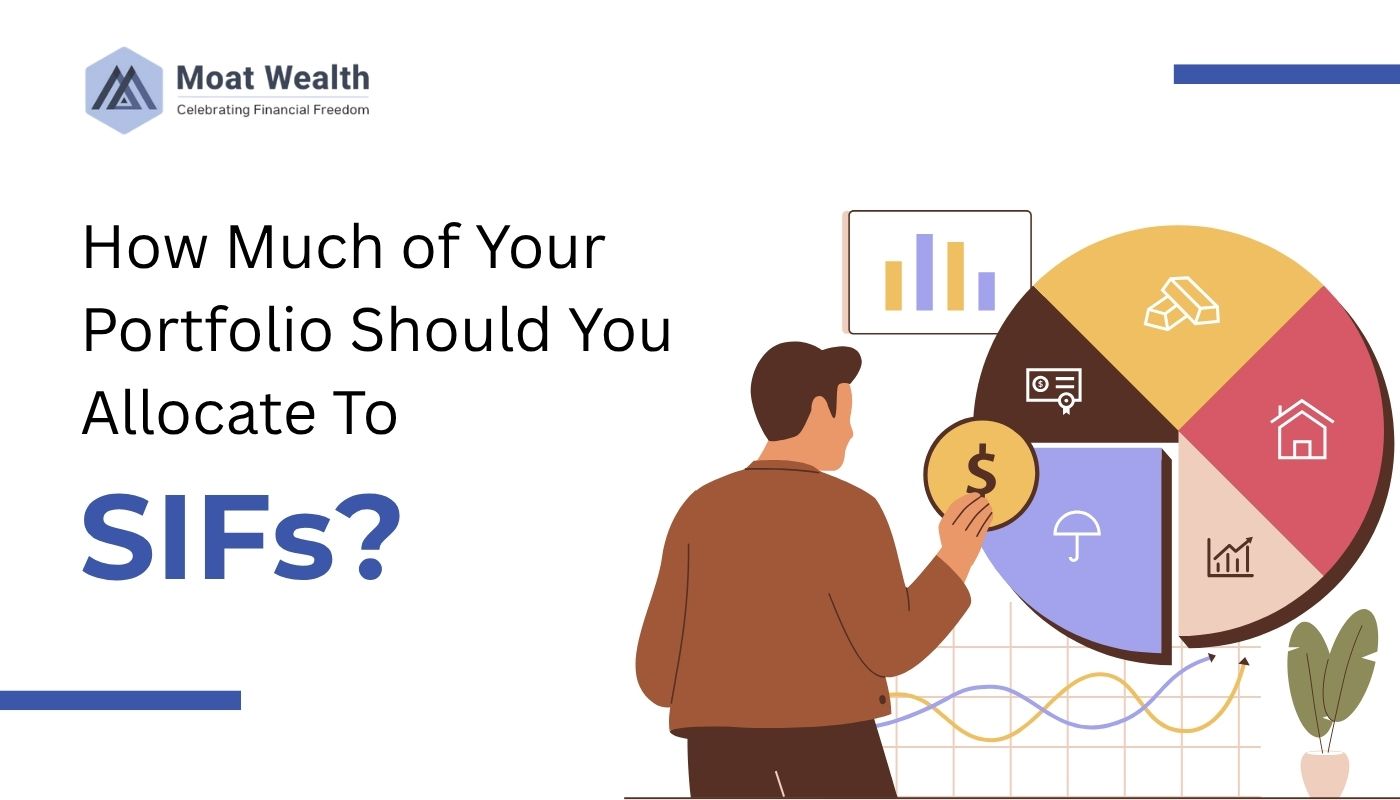
For HNIs, the real question isn’t whether to invest in a Specialised Investment Fund — it’s how much, and where it fits within the broader portfolio. Specialised Investment Funds (SIFs) were introduced by SEBI to bridge the gap between conventional mutual funds and more flexible investment products such as PMS. SIFs can offer strategies including equity long-short, debt long-short, sector rotation and active asset allocation.
But there is no regulatory or universally appropriate percentage that an HNI should allocate to SIFs. The right allocation depends on the strategy, existing portfolio, risk tolerance, liquidity requirements and the role the SIF is expected to play.
How Should HNIs Decide Their SIF Allocation Percentage?
An SIF should be evaluated as a strategy rather than as a separate asset class. An equity long-short SIF, debt long-short strategy and Active Asset Allocator SIF can have very different return and risk profiles.
The first question should therefore be: What problem is this SIF solving in my portfolio?
It could be seeking diversification, a differentiated source of returns, downside management, tactical exposure or access to a strategy that is difficult to implement independently.
Once that question is answered, the next step is translating it into an actual number. A practical starting point is to consider the allocation in three broad ranges, based on the strategy’s role, track record and risk contribution to the overall portfolio.
I. 0–5%: Initial or Exploratory SIF Allocation
A smaller allocation can be appropriate when evaluating a new strategy or manager, particularly when the SIF has a limited live track record.
At this level, the objective is to gain experience with the strategy and assess how it performs across different market conditions before committing more capital.
II. 5–15%: Meaningful SIF Satellite Allocation
This range can be appropriate when the SIF offers a clearly differentiated source of returns and complements the investor’s existing portfolio.
For example, an equity long-short SIF may add a different return profile to a portfolio dominated by long-only equities. However, investors should examine look-through exposure to determine whether the SIF genuinely diversifies the portfolio or simply replicates existing stock, sector or factor exposures.
III. 15%+: Strategic SIF Allocation
A larger allocation requires substantially stronger conviction.
At this level, investors should understand the strategy’s historical drawdowns, liquidity, portfolio concentration, leverage or derivative usage, manager dependence and expected behaviour during stressed markets.
The allocation should also be considered alongside the investor’s other alternatives, PMS mandates, AIFs and direct investments.
A 20% allocation to SIFs may appear reasonable on paper but become aggressive if another 30% of the portfolio is already exposed to similar equity or alternative strategies.
Also Read: 5 Common Myths About Specialised Investment Funds
Does the ₹10 Lakh SIF Minimum Investment Determine Your Allocation?
SEBI requires an aggregate minimum investment of ₹10 lakh across all investment strategies offered by an SIF at the investor’s PAN level, with an exemption for accredited investors. The threshold applies specifically to SIF investments and does not include regular mutual fund holdings with the same AMC.
For an HNI, however, this is an eligibility threshold, not an allocation recommendation.
An investor with a ₹5 crore portfolio could technically meet the threshold with ₹10 lakh, but that does not mean ₹10 lakh is necessarily an economically meaningful allocation. Conversely, investing substantially more simply because the minimum is low can create unnecessary concentration.
How Should HNIs Assess SIF Risk in a Portfolio?
Under SEBI’s framework, eligible SIF strategies can have up to 25% of net assets in permissible exchange-traded derivatives for purposes other than hedging and portfolio rebalancing. The framework also permits limited unhedged short exposure through derivatives, subject to strategy-specific limits.
Therefore, an investor should not evaluate an SIF solely by asking, “What percentage of my wealth is invested?”
Instead, to assess risk, ask:
- How much equity beta does the strategy actually carry?
- What happens to the portfolio during a 20% equity-market correction?
- How much overlap exists with my existing holdings?
- What percentage of my portfolio could become illiquid during stress?
- How much of the return depends on the fund manager’s ability to generate alpha?
How Does Liquidity Affect SIF Allocation for HNIs?
SIFs do not necessarily offer the same redemption profile as conventional open-ended mutual funds.
SEBI allows subscription and redemption frequencies to vary according to the nature of the strategy. Certain SIFs may therefore have weekly or other redemption frequencies, and AMCs can impose notice periods of up to 15 working days where appropriate.
For HNIs, this means SIF allocation should generally come from capital that does not need to remain immediately accessible for near-term spending, taxes, business requirements or other commitments.
How Should You Decide Your SIF Allocation?
A sensible SIF allocation can be determined through five steps:
1. Define the objective: diversification, alpha, downside management or tactical exposure.
2. Map existing exposures: identify overlap across mutual funds, PMS, AIFs, direct equities and other alternatives.
3. Assess the strategy: understand its return drivers, derivatives, short exposure, concentration and liquidity.
4. Start proportionately: use a smaller allocation when strategy or manager experience is limited.
5. Review contribution: evaluate whether the SIF is actually improving portfolio risk-adjusted returns rather than simply adding another product.
For an HNI, the right SIF allocation is therefore not a fixed percentage. It is the amount that gives the strategy enough room to contribute meaningfully while keeping its risks consistent with the portfolio’s broader objectives.
The ₹10 lakh minimum tells you how much you may need to invest. Your portfolio construction should determine how much you actually invest.
You may also like to read: How Often Should You Rebalance a High-Net-Worth Portfolio?
Disclaimer: Content on all platforms of Moat Wealth Associates LLP is for educational/ informational purposes only. The materials/information on this website are for information, financial literacy and educational purposes only. Moat Wealth Associates LLP is not a SEBI-registered IA.